
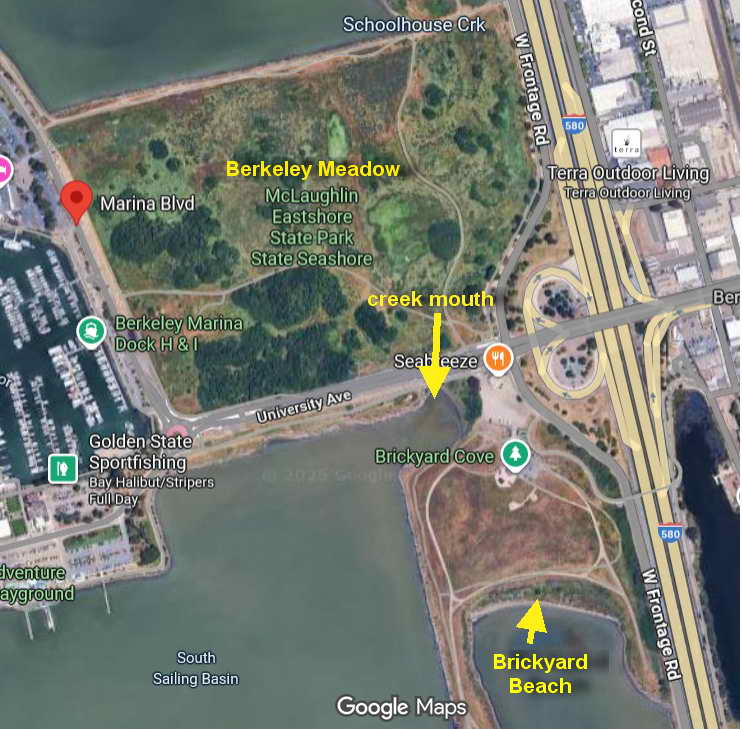
Click map of area above for larger image. By bicycle or foot, the area is easily reached by the Bay Trail or walk/bike bridge over I-80. AC Transit 51B buses get you there.
- OpenStreetMap has an online map of the trails in this area.
- Historic Maps
- History and Future of the Berkeley Waterfront (PDF)
- Wikipedia article on Strawberry Creek
Click on photos to see larger images:
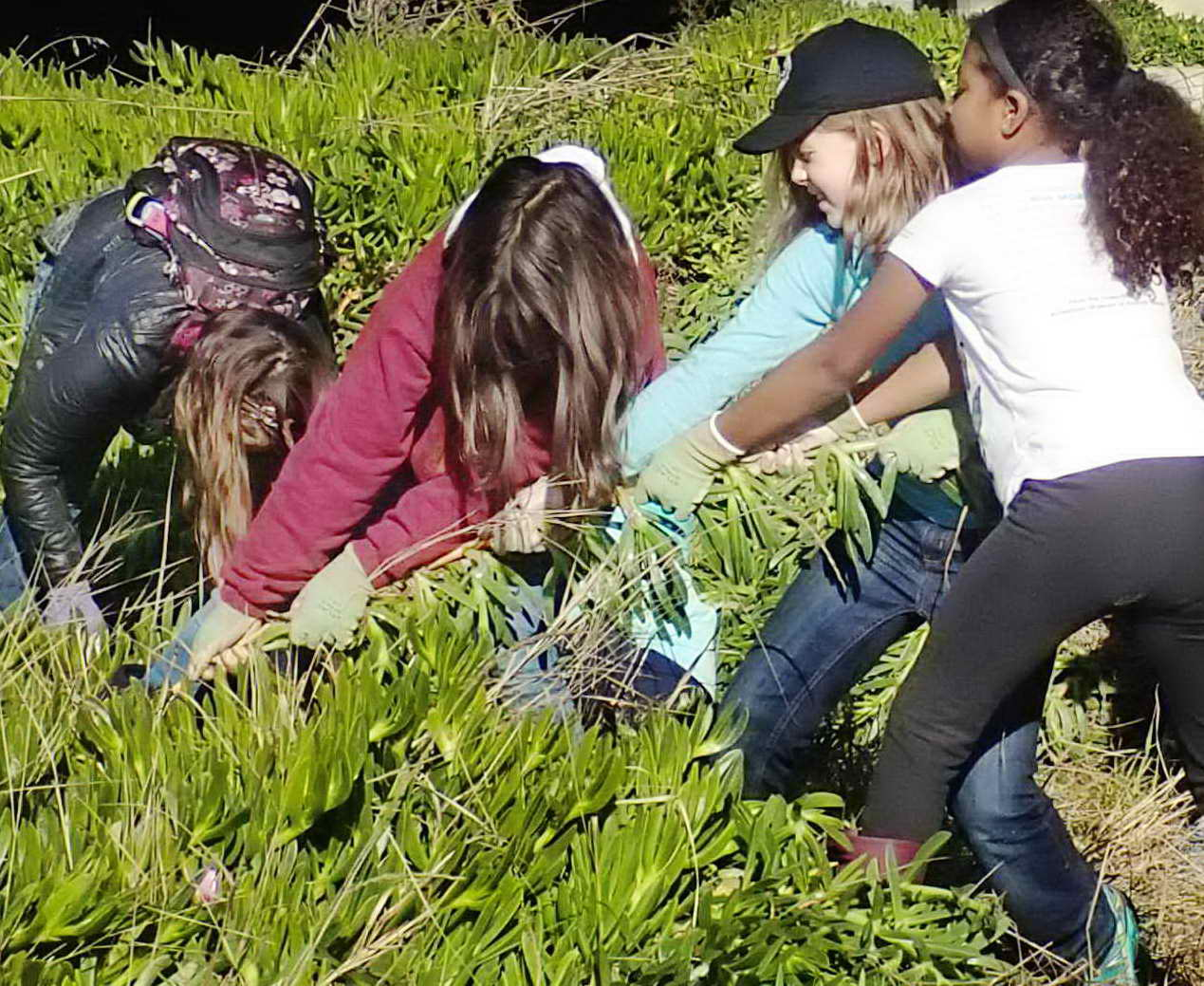
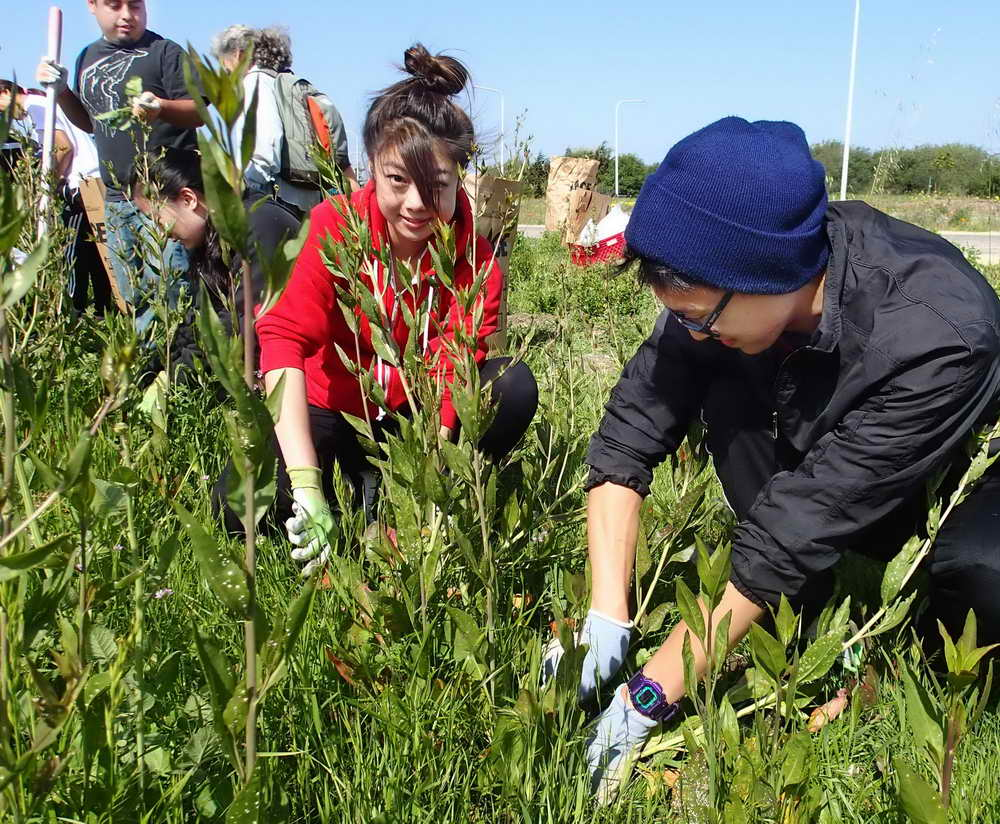
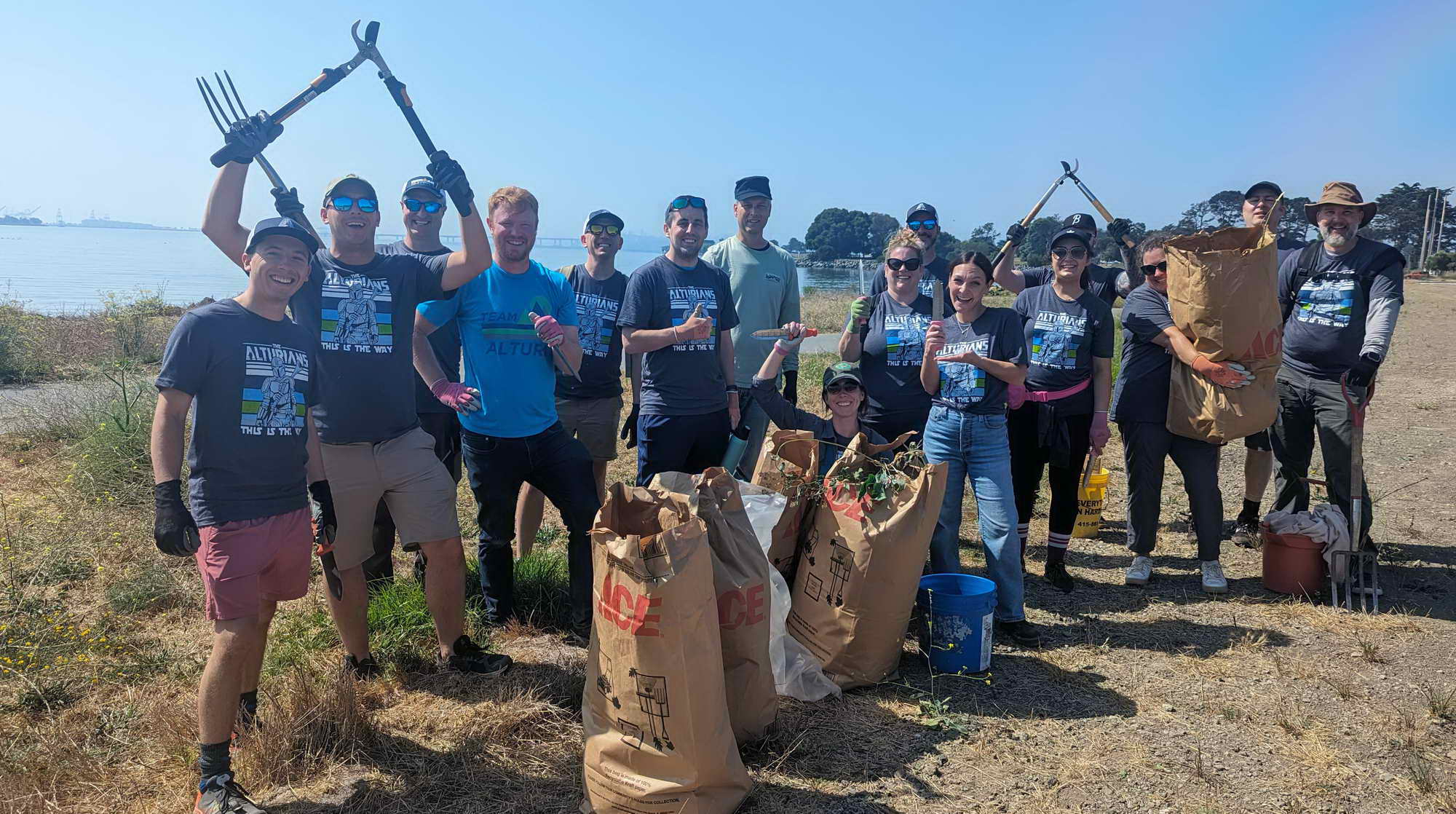
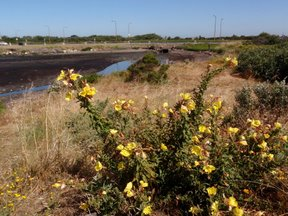
Strawberry Creek mouth, Meadow, & Brickyard areas, Eastshore State Park
Friends of Five Creeks volunteers have worked on the shoreline on both sides of the mouth of Strawberry Creek since the late 1990s, before the shoreline was made part of the then-new McLaughlin Eastshore State Park, managed by the East Bay Regional Park District. We have controlled serious invaders that threaten habitat Bay-wide, planted varied natives and by removing weeds made space for natives to return on their own, and contributed in many ways to making this a welcoming for people and wildlife.
Much of this thousands of hours of effort may become irrelevant as the shoreline erodes — at least partly because we replaced the invasives, especially ice plant.
Friends of Five Creeks’ began with what has been our major and never-ending effort: controlling the perennial pepperweed (Lepidium latifolium) that whose seeds and bits of root easily spread it Bay-wide. Years of work, including putting tarps covered with chips over big inland patches, have suppressed the big pure stands we found when we started. But the deep and connected roots remain and without freqent control will re-sprout and spread. The East Bay Regional Park District, using herbicides as we cannot, seems to have all but eliminted pepperweed in the park’s developed Brickyard area, where we similarly kept it under control for more than a decade. But we get no answers to our questions about when, if ever, the District will take responsibility in the Strawberry Creek area.
Volunteers love working at the waterfront, so work on the beach mushroomed. We established a now dense cover of native shrubs on the steep south edge of the beach. A Boy Scout Eagle project built steps. Big work parties of young folks removed ice plant that covered much of the beach. This was followed by years of pulling and digging Pampas grass, French broom, thistles, poison hemlock, fennel, blackberry, and more. In the areas cleared of weeds, we planted creeping wildrye and beach evening primrose – which spread rapidly — along with other natives. Others washed in or sprang up on their own: tules, gum plant, native Limonium, salt marsh heliotrope, and more. As saltwater encroaches, some of these are now dying, along with the native willows close to the shoreline.
After the new Bay Trail spur was built along the strip south of University, both Berkeley and the Park District abandoned their new native plantings. Little remains except Western ragweed (Ambrosia psilostachya) and tough frogfruit (Lippia nodiflora) — both perhaps not planted. A few California sage, mugwort, and creeping wildrye patches we planted may wash away, along with the typical beach natives that have came in on their own over out long watch.
Much earlier, before the area was a park, we had helped removed invasive yellow star thistle from the Berkeley Meadow, enjoying the richness of wildlife in the weedy old dump and ponds where the clay cap had sunk. As “restoration” covered the Meadow with new soil, new ponds were dug, and new plants seeded, section by section, we helped control Salsola, broom, fennel, poison hemlock, thistles, radish, and especially stinkwort.
When the Park District began developing the Brickyard area, where we had long fought pepperweed, we worked for a few years along the curving, south-facing Brickyard Beach. Kids especially enjoyed pulling up the thick ice plant that covered much of the wide back beach. But the District’s attempt to re-seed the rest of the “Brickyard” area with native grasses came up almost entirely in weeds. The District closed the area for an additional two years, changed its plan, and used herbicide to create some areas with natives. Much of the progress we had made on the beach was lost while we were shut out. We have not returned.
Is this project a success? Many people have enjoyed this much-used waterfront in ways they could not if we hadn’t tended it. Many people have found meaning volunteering here — with us, with other groups picking up trash, and on their own. Far fewer shorebirds and waterbirds use the cove and Central Bay. The small beach and shoreline, products of landfill, are washing away, at least partly because we removed the pepperweed and ice plant. Berkeley mows faithfully, but neither Berkeley nor the Park District shows signs of dealing with this, as storm waves and debris wash closer to low-lying University Avenue, the only road into the Marina peninsula, where Berkeley hopes to add hotels, restaurants, and a ferry.
See a two-minute slide show of our work at the mouth of Strawberry Creek. Click slide to advance faster: